Serum tryptase in allergic reactions
Tryptase objectively documents mast cell activation. The acute value is always interpreted against the individual baseline level.
When measuring tryptase is useful
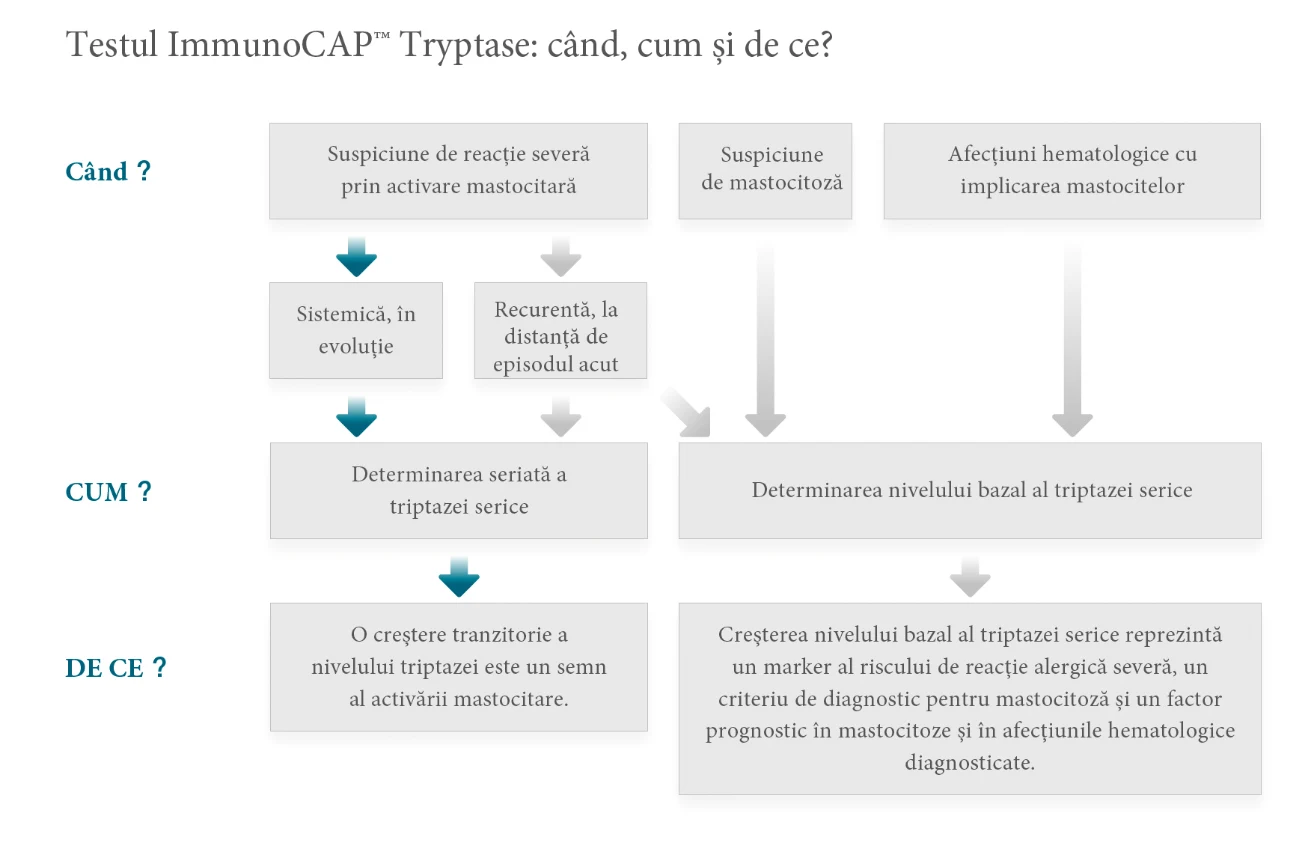
Serum tryptase testing with ImmunoCAP™ technology is a laboratory investigation useful in the assessment of anaphylactic reactions, of suspected mast cell activation and of clonal mast cell disorders such as systemic mastocytosis.
Tryptase is a protease released predominantly by mast cells, and a rise in the serum level in an acute setting can support a diagnosis of anaphylaxis when it is interpreted against the individual baseline value.
The acute phase and the baseline value
In allergy practice, tryptase measurement has value both in the acute phase, ideally sampled within the first hours after the reaction starts, and in baseline assessment, performed well away from the acute episode.
Through the analytical sensitivity and the standardisation of the ImmunoCAP™ method, this test contributes to the objective documentation of mast cell activation and helps direct further investigation in cases with severe, recurrent or apparently idiopathic systemic reactions.
Tryptase in the emergency department
A raised, transient tryptase concentration, appearing 15 minutes to 3 hours after the reaction, can help distinguish an anaphylactic origin through mast cell activation from a non-immunological cause.
The baseline tryptase concentration is normally very stable over time, and the tryptase level returns to baseline at least 24 hours after the symptoms have completely resolved.
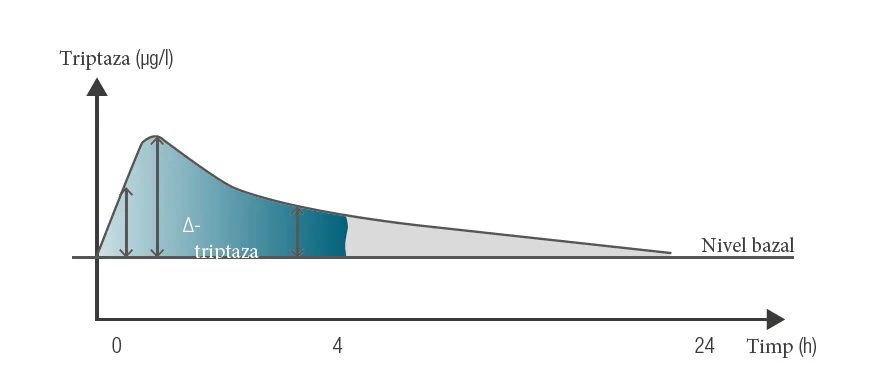
Confirmation of mast cell activation: acute tryptase greater than or equal to baseline tryptase plus 20% of the baseline value, plus 2 micrograms per litre.
Baseline tryptase is measured on a sample taken at least 24 to 48 hours after the symptoms of the reaction have resolved.
When, how and why