
Total IgE vs allergy screening
Total IgE measures the overall IgE load without indicating the allergen. Screening tests detect sensitization to commonly involved allergens.
What total IgE measures
The total IgE test measures the overall concentration of immunoglobulin E present in serum, usually expressed in kU/L.
The result gives a picture of the global level of circulating IgE, but it does not indicate which allergen or antigen those immunoglobulins are directed against. In other words, total IgE reflects the general IgE load of the body, regardless of its specificity.
Why a raised total IgE is not a diagnosis
A raised total IgE level can be found in an atopic or allergic context, but on its own it does not confirm an allergy diagnosis. Raised values can also appear in other situations.
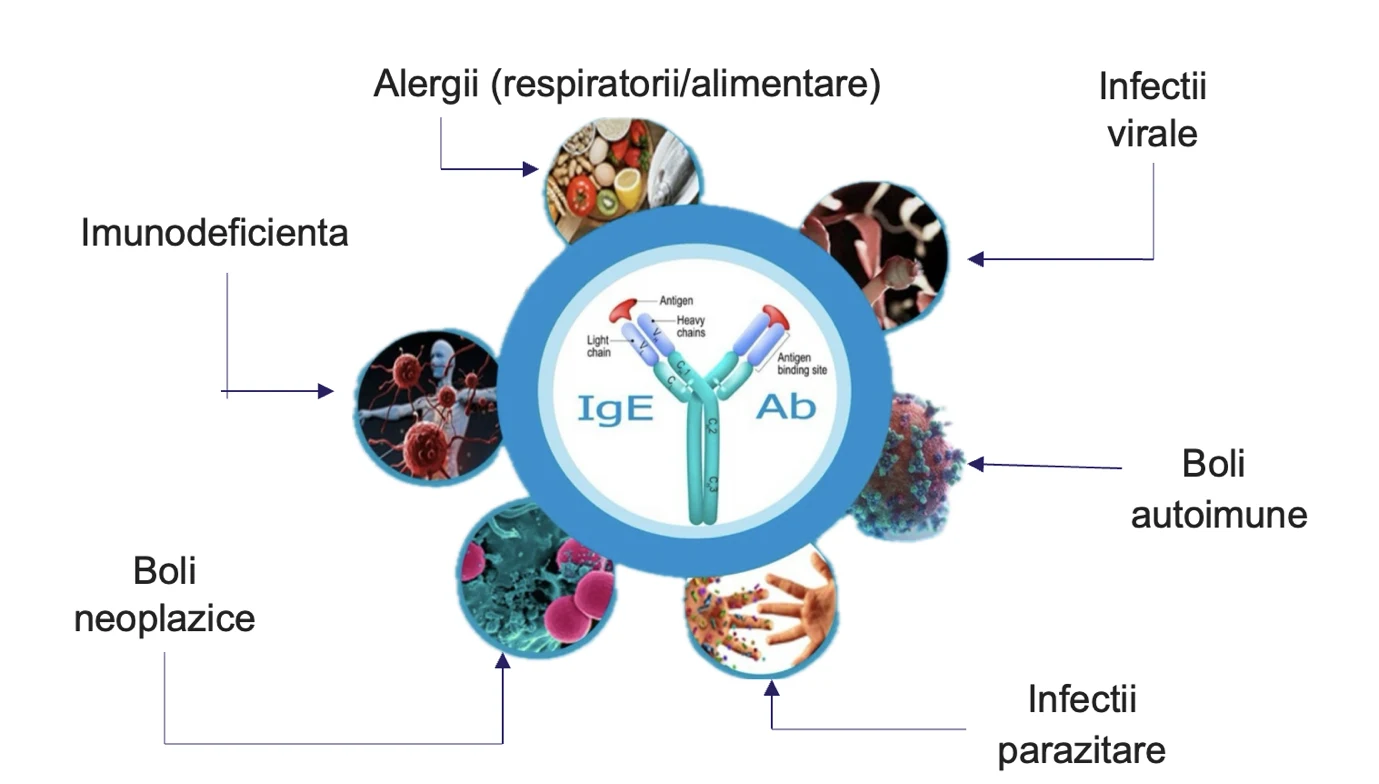
For this reason, total IgE has indicative value and must always be interpreted together with the clinical history, the symptoms and, where appropriate, with specific IgE testing for individual allergens or allergen components.
Half of patients are missed by a total IgE test. In respiratory allergy, only 50% of patients have raised total IgE levels, above 100 kU/L, which means that half of these patients cannot be detected by measuring total IgE.
The difference from screening tests
Unlike total IgE, which measures the global level of immunoglobulin E without indicating its specificity, Phadiatop™ and Phadiatop™ Infant detect specific IgE against a standardised mix of allergens commonly involved in respiratory and food allergy.
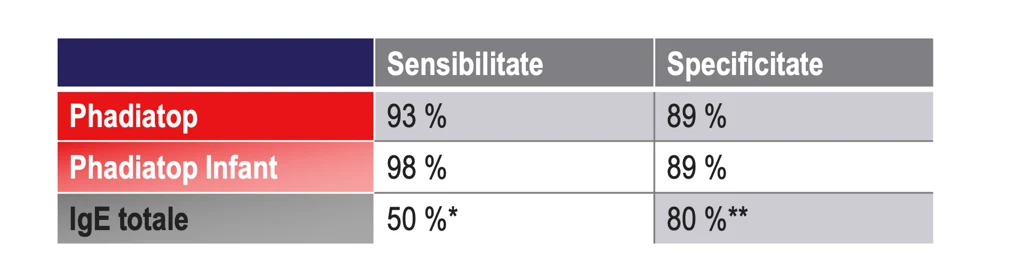
Through this approach, screening tests have greater clinical utility than total IgE in separating patients with respiratory or food allergic sensitization from those whose symptoms may have other causes. Studies show that the test can correctly discriminate between allergic and non-allergic patients in over 90% of cases.
In short
| Aspect | Total IgE | Phadiatop / Phadiatop Infant |
|---|---|---|
| What it measures | The overall amount of IgE in serum | Specific IgE against a standardised mix of allergens |
| Allergen specificity | Does not indicate the allergen | Indicates sensitization to the included allergens |
| Reporting unit | kU/L | Positive or negative result |
| Role in the pathway | Indicative, complementary information | First assessment step in suspected IgE-mediated allergy |