
ImmunoCAP specific IgE testing
ImmunoCAP quantitatively measures specific IgE antibodies against individual allergens, allergen mixes and molecular components, from a blood sample.
What specific IgE blood testing is
The immune system produces several classes of antibodies, each with a different role in the body’s defences.
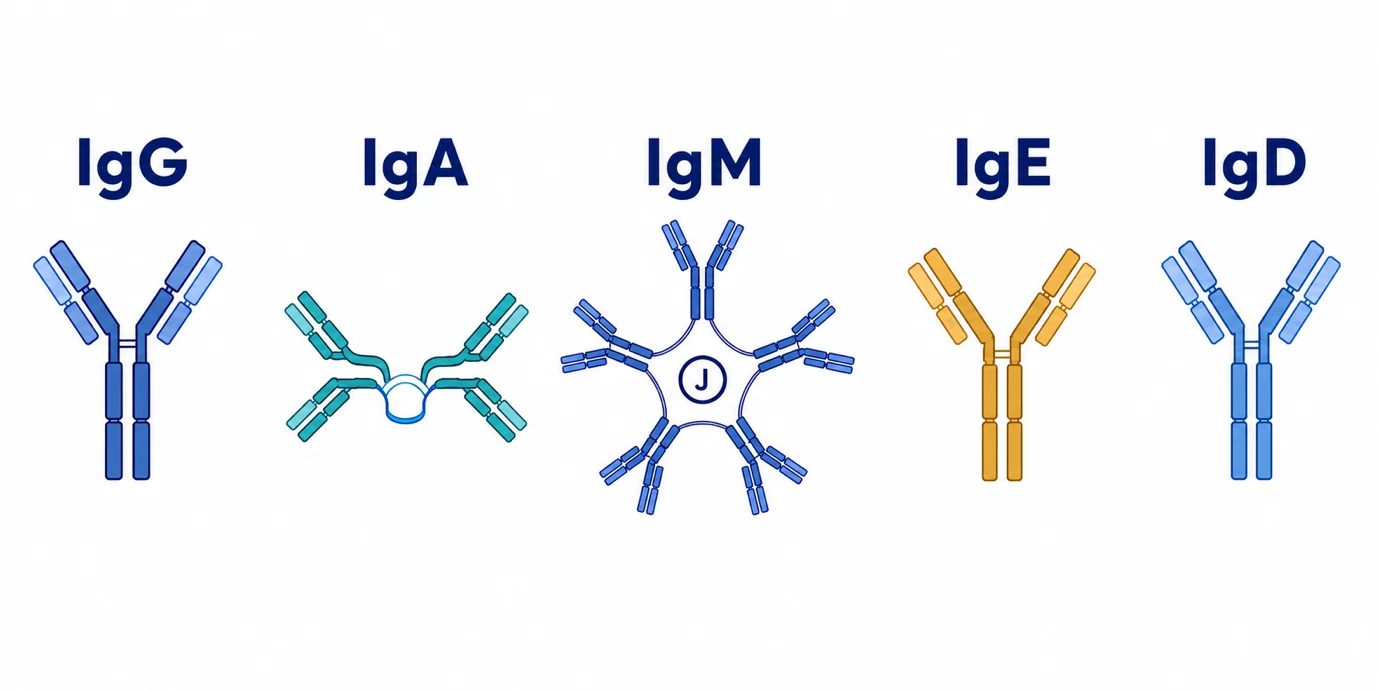
- IgG are the most abundant antibodies in blood and are involved in long-term protection.
- IgA are found at mucosal surfaces and contribute to local defence.
- IgM commonly appear in the early phases of an immune response.
- IgE are the antibodies associated with allergic responses and with antiparasitic defence.
- IgD play a role in the maturation and activation of B lymphocytes.
What happens in IgE-mediated allergy
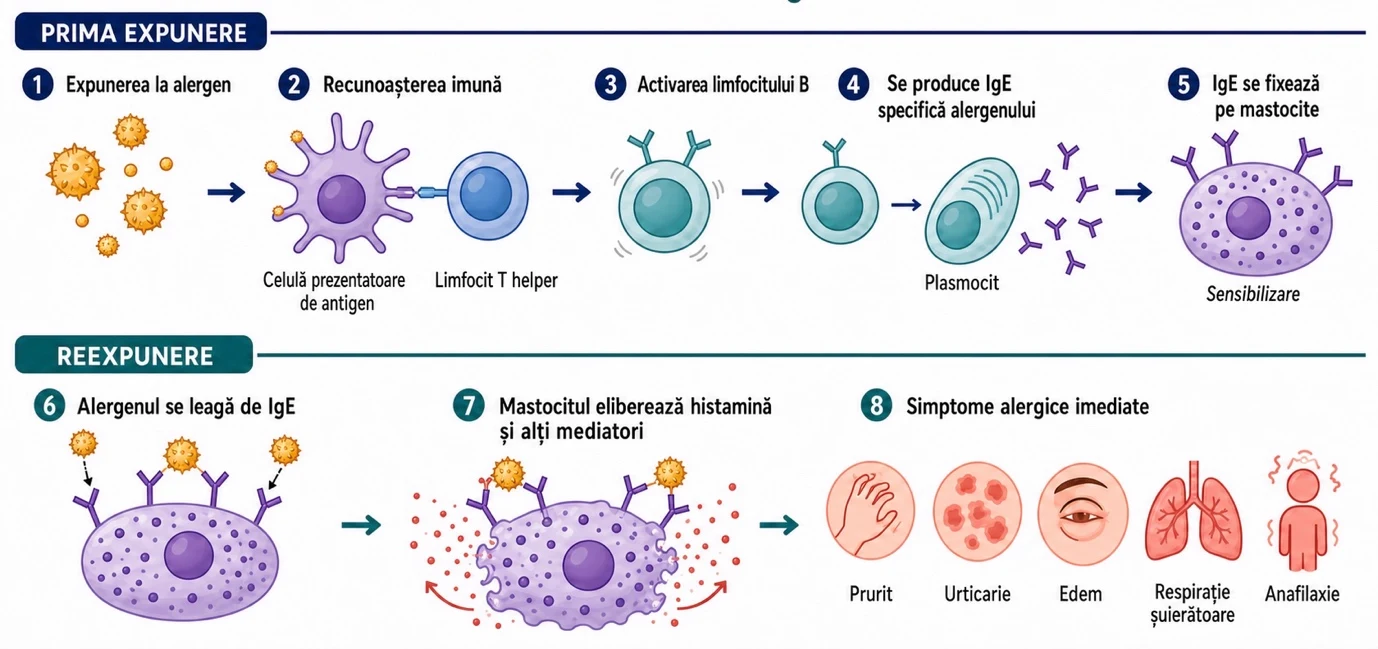
In IgE-mediated allergy, the body produces IgE antibodies against allergens that are harmless to most people, such as pollens, dust mites, moulds, foods, venoms or animal danders.
These IgE antibodies can bind to the surface of mast cells and basophils, the cells involved in allergic reactions. On re-exposure to the allergen, activation of these cells can lead to the release of inflammatory mediators, such as histamine, which cause the symptoms.
What the test actually measures
ImmunoCAP™ specific IgE testing is an advanced immunoassay performed on blood, which measures the presence of IgE antibodies directed against individual allergens or allergenic molecular components.
This type of testing is used to objectively document IgE-mediated sensitization when there is a clinical suspicion of allergy, based on symptoms, medical history and exposure context.
A positive specific IgE result does not confirm an allergy diagnosis on its own. It shows that the immune system has produced antibodies against that allergen. The result becomes clinically relevant only when it matches the symptoms.
ImmunoCAP™ specific IgE testing is therefore a diagnostic tool that helps the physician distinguish sensitization from clinical allergy, identify the relevant allergens, assess the risk of systemic reactions and guide treatment decisions.
What ImmunoCAP and the FEIA method mean
ImmunoCAP™ is an in vitro allergy testing technology recognised as a reference standard for determining specific IgE antibodies in blood against individual allergens or allergenic molecular components.
This type of testing does not expose the patient directly to the allergen. It uses a blood sample, which makes it safe and useful even when skin testing is not possible or has to be postponed.
The method used is FEIA, fluoroenzyme immunoassay, an enzyme immunoassay with fluorescence detection.

The principle is that of a sandwich assay: the allergen is bound to a solid phase, and if the patient’s serum contains specific IgE antibodies against that allergen, they will bind to it. An enzyme-labelled anti-IgE antibody is then added, and the resulting fluorescent signal is proportional to the amount of specific IgE present in the sample.
The result is reported quantitatively, in kUA/L, which allows not only the identification of a sensitization but also the monitoring of specific IgE levels over time, using the same method.
The three-dimensional solid phase
An important element of ImmunoCAP™ technology is the three-dimensional solid phase based on a cellulose derivative.
It provides a large binding surface and a microenvironment that allows allergens to be attached in a stable way, preserving the structures relevant for immunological recognition.

Go deeper on the subject
Each topic has its own page, with the full explanation. These pages are currently published in Romanian.
What specific IgE testing is
Antibody classes, the mechanism of IgE-mediated allergy and what the blood test actually measures.
What ImmunoCAP (FEIA) means
The principle of the fluorescent enzyme immunoassay and the role of the three-dimensional cellulose solid phase.
Why the laboratory method matters
Sensitivity, standardisation in kUA/L, traceability to the WHO standard and the limit of detection.
Interferences
The role of the matrix, biotin interference, cross-reactive carbohydrate determinants and competition with IgG.
Events and webinars
Webinars, ImmunoCAP conferences and video material published with the organisers’ approval.