
Allergy testing for patients
An allergy diagnosis is not based on a single test, but on matching the clinical history, the symptoms, the exposure and the test results.
A diagnosis is not based on a single test
An allergy diagnosis is not based on a single test, but on matching the clinical history, the symptoms, the exposure and the test results.
Both skin testing and blood testing can demonstrate IgE-mediated sensitization.
Skin testing
Skin testing assesses how the skin reacts to direct contact with an allergen. It is commonly used in respiratory allergy, food allergy, venom allergy and sometimes drug allergy, depending on the context and the medical indication.
Skin prick test
This is one of the most widely used methods for assessing immediate allergic sensitization. It is performed on the skin, usually on the forearm, by applying drops of standardised allergen extracts. A lancet is then used to make a light prick through each drop, so that the allergen comes into contact with the superficial layer of the skin.
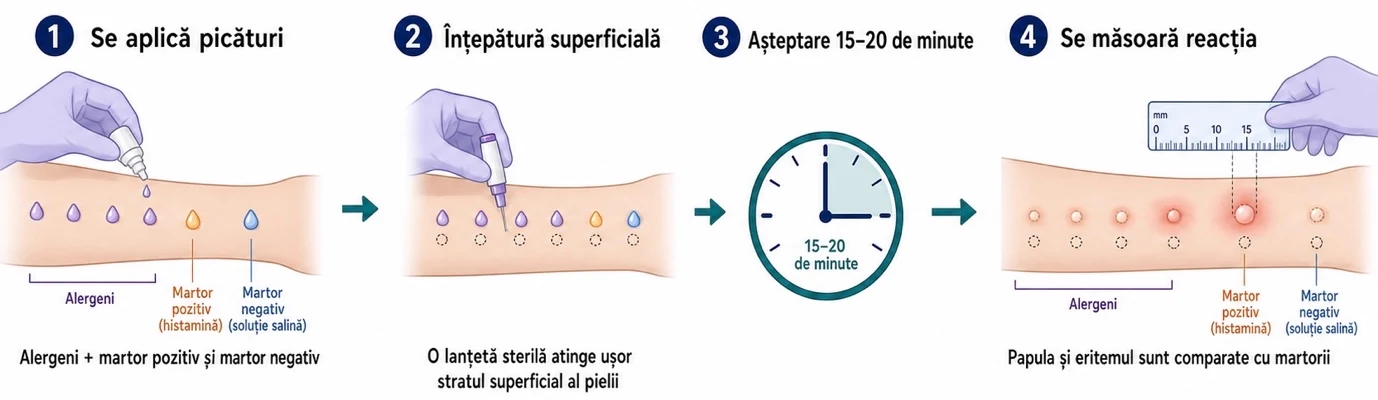
After roughly 15 to 20 minutes, the doctor assesses and measures the local reactions that have appeared. A positive result may show as an erythematous wheal. The procedure is quick, minimally invasive and generally well tolerated.
Prick to prick test
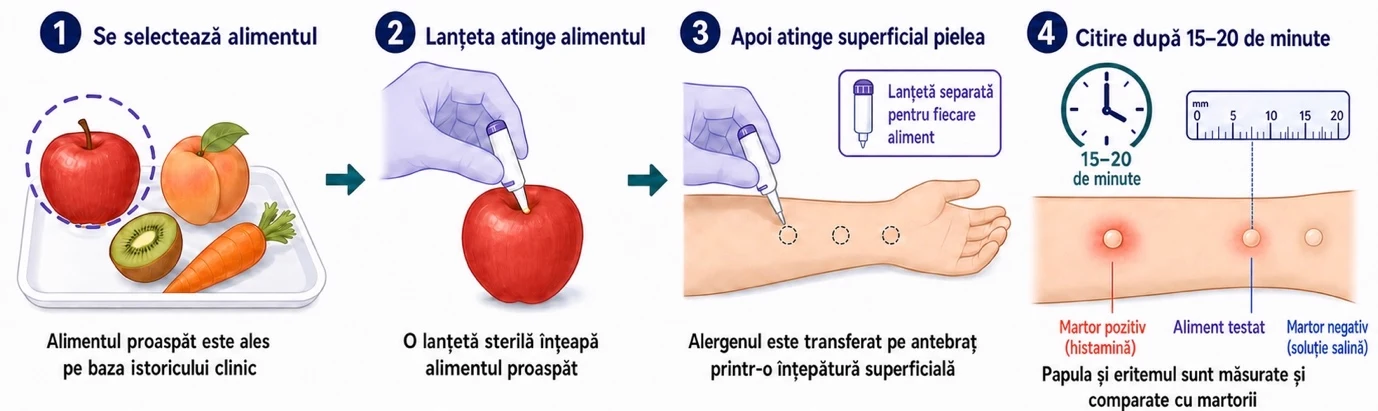
This method is used mainly when a fresh food allergy is suspected, for example to fruit, vegetables or tree nuts, for which commercial extracts can be less stable, or in oral allergy syndrome.
Unlike the skin prick test, the lancet first touches the fresh food and only then the patient’s skin.
Intradermal test
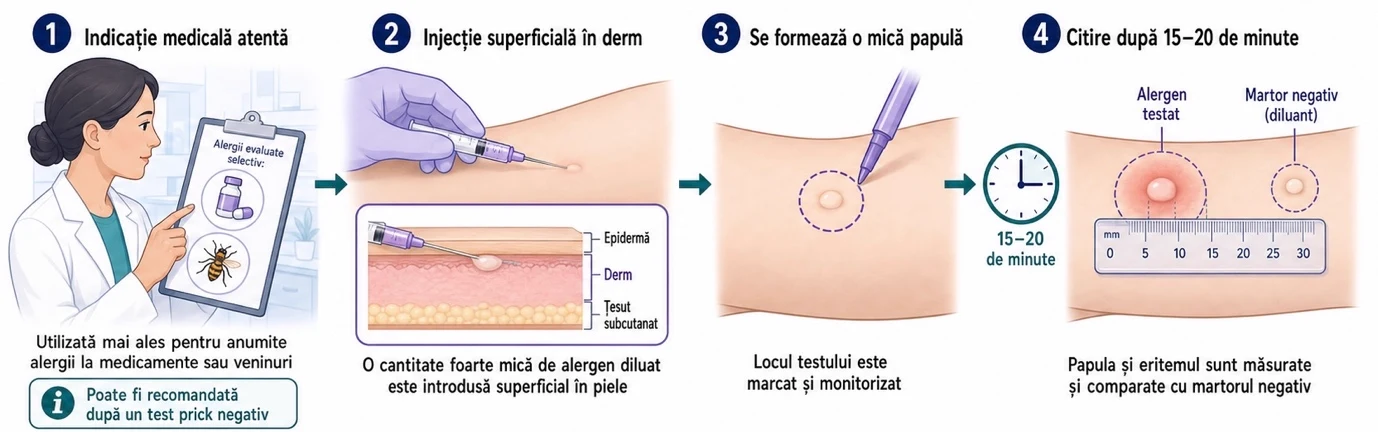
This involves injecting a very small amount of allergen into the dermis. It is more sensitive than the skin prick test, but carries a higher risk of local or systemic reactions, which is why it is used selectively.
Patch test
The patch test assesses delayed, cell-mediated hypersensitivity reactions and is used mainly in allergic contact dermatitis, for example to metals, fragrances, cosmetics or preservatives. The result requires three readings: at 48, 72 and 96 hours.

Blood testing, ImmunoCAP specific IgE
Blood testing measures specific IgE antibodies against individual allergens, molecular components or allergen panels. Unlike skin testing, the patient’s skin is not exposed directly to the allergen. A blood sample is taken and analysed in the laboratory.
This method is particularly useful when skin testing cannot be performed or would be difficult to interpret: patients with extensive dermatitis, dermographism, antihistamine treatment that cannot be interrupted, an increased risk of reactions, very young age, or situations where quantifying specific IgE is needed.
What the main difference is
Skin testing shows how the patient’s skin reacts on contact with an allergen, while blood testing measures the circulating specific IgE antibodies. Both can indicate sensitization, but neither confirms an allergy diagnosis on its own in the absence of matching symptoms.
Skin testing
It has the advantage of a fast result, a low cost and moderate usefulness in many respiratory allergies.
It can be affected by antihistamines, dermographism, active skin disease or the quality of the extracts used.
Blood testing
It is easier to carry out in situations where skin testing is not suitable.
It does not require stopping antihistamines and allows quantitative and molecular assessment.
Everything you need to know, step by step
Each stage of the journey has its own page, from the first symptoms to understanding the result. These pages are currently published in Romanian.
What allergy is and when to suspect it
The mechanism of IgE-mediated allergy, the atopic march and the signs that raise suspicion.
Sensitization vs allergy
Why a positive test does not automatically mean allergy, and when it becomes clinically relevant.
ImmunoCAP specific IgE testing
What the blood test measures and how the technology works.
What can be tested with ImmunoCAP
Respiratory allergens, foods, venoms, latex and molecular components.
Preparing for the consultation
Which symptoms to note down and what to discuss with your doctor before the assessment.
Preparing for the test
What to do before the blood test, the skin prick test and patch testing.
How a result is interpreted
What positive means, what negative means, and why the number is not read mechanically.